

Why is There a Hole in My Driveway Slab?
What concrete settling looks like in your driveway depends on a few factors. How advanced the settling is, the strength of the concrete, and how much weight it has to support on a regular basis all influences how the concrete settles. When homeowners think of slab settling, they often imagine an intact slab with a sinking half. However, settling can appear in more ways than that, which is why many homeowners have trouble recognizing the signs of settling, even when they are very obvious. One such sign is a crater forming in the middle of your slab.
This crater is more likely to appear on your driveway slab than any other part of your property. This is because of the amount of weight the slab has to support on a regular basis as you drive your car in and out of the driveway. As the soil that is meant to support the slab erodes and loses its volume, a hole begins to form under the slab. When resting on top of an uneven layer, concrete cannot distribute weight evenly across its form, so it cracks under a lot of pressure. When you drive your car over the compromised slab, it cracks where the void is and creates a crater.
More often than not, slabs that have been broken this way can rarely ever be repaired. Many slabs with craters have to be replaced instead, which is a much more expensive procedure than concrete lifting. To avoid this type of damage on your driveway slabs, preventing exposure to moisture by getting a driveway cover is your best bet. The soil in Rochester has a lot of clay, so limiting the amount of swelling and shrinking it goes through will ensure the longevity of your driveway concrete.
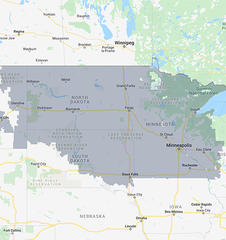
Our Locations
1330 41st St. N
Fargo, ND 58102
6265 Carmen Ave.
Inver Grove Heights, MN 55076
1325 S Frandsen Ave
Rush City, MN 55069