

Why Are My Slabs Settling?
You have to be incredibly well-versed in the problem signs of concrete settling to be able to detect it early. This is because the soil erosion that causes settling in the first place happens underground where the homeowner cannot see it happening. But, in a place like Duluth-Superior, besides detecting slab settling early, it can also be difficult to detect the reason why your slab is settling in the first place. Depending on the soil characteristics of your property, your slab may be settling for a number of different reasons. The problem is, Duluth-Superior has some of the most diverse soil content in the Midwest.
The soil of the region can be abundant in clay and poorly-drained as well as sandy and loose. One of the many soil types found are Histosols, which are full of organic material, retain water incredibly well, and swell when exposed to moisture. Once dry, they shrink and lose volume. This volume reduction causes gaps to appear under the slab, which is why one side of the slab sinks low to the ground when settling. Clay soils like Histosols erode regardless of whether or not the terrain is at an incline.
Other soil types found in northern Minnesota, like Entisols, are sandy, coarse, friable, and loose. They do not swell when exposed to water because they don’t have enough clay and organic materials to absorb moisture. However, because the particles are loose and shifty, they wash away easily when met with a stream of running water. It’s difficult to know what exactly is going on with the soil on your property until you get it tested to see what kind of soil it is. Once you have a better understanding of your property’s soil, you can begin making the necessary changes to prevent as much slab settling as possible.
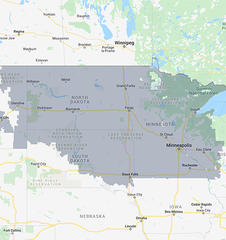
Our Locations
1330 41st St. N
Fargo, ND 58102
6265 Carmen Ave.
Inver Grove Heights, MN 55076
1325 S Frandsen Ave
Rush City, MN 55069