

Why Are My Walls Bowing?
If you notice a curve or lean to your basement walls, you may be very concerned. After all, your basement walls are crucial to maintaining the structure of your property. They are load-bearing walls and so any signs of instability have the possibility of snowballing into damage that poses a real risk of those walls collapsing at some point. Bowing walls can be caused by several issues including:
- Foundation Damage
Foundation damage can be caused by many factors and leads to a generally decreased level of stability in your property. Subsidence, for example, can cause extra pressure to be placed onto certain walls. This extra pressure can cause cracks and crumbling, but buckling or bowing walls are also a very real possibility.
Another possibility is settlement, which can be caused by expansive soil. Settlement occurs when soil shrinks as a result of dehydration, leaving parts of a foundation unsupported. As a result, sections of a property’s foundation can fall into those gaps. When this happens, the property can, once again, become unstable. Bowing walls are just one possible outcome of this.
- Expansive Soil
Expansive soil is the single most common cause of bowing and damaged walls in a property. This is because of the immense, lateral pressure that expanding soil can put onto your basement walls. While soil saturation can cause serious issues, expansive soil is not solely caused by saturation; it’s to do with the make-up of the soil as well.
If you have a clay or peat-based soil around your property, you are likely to experience far more lateral pressure against your basement walls and foundation than if you have a loam or sand-based soil. This will be further exacerbated if there are underground water sources near your property. Expansive soil can also damage your foundation and cause heaving under your driveway and patio.
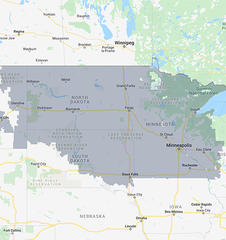
Our Locations
1330 41st St. N
Fargo, ND 58102
6265 Carmen Ave.
Inver Grove Heights, MN 55076
1325 S Frandsen Ave
Rush City, MN 55069